
Regional Queensland
Regional recruitment specialist for Queensland employers, from Cairns to Toowoomba and Mount Isa. See how hard each region is to hire in, and how we help.
Hire Australia is a regional recruitment specialist. We help allied health practices, rehabilitation providers, aged-care and disability services and community health teams across regional Australia hire accredited exercise physiologists, from new graduates to senior clinicians. Accreditation, the referral mix and the travel are part of the brief from the first conversation.
Exercise Physiologist is rated in regional shortage nationally for 2026, which means employers outside the cities find these roles hard to fill. It is also a young workforce, so many candidates are early in their careers.1,2
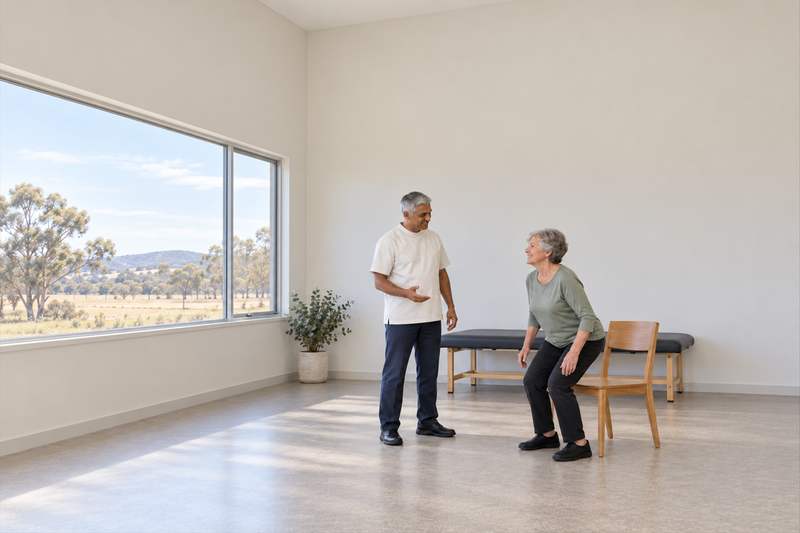
Exercise physiologists assess, plan and run exercise programs to prevent and manage chronic disease and injury, including heart disease, diabetes, osteoporosis, depression, cancer and arthritis. They test and assess patients, design and review treatment programs, record progress and work with other health professionals.2
Exercise physiology is self-regulated and not registered through Ahpra. Accreditation is through Exercise and Sports Science Australia (ESSA), and only ESSA-accredited exercise physiologists can provide services under some Medicare programs.4 ESSA requires accredited exercise physiologists to complete 20 CPD points each calendar year, including at least 15 Further Education points, subject to its pro-rata and return-to-practice rules.5 Employers can check a candidate's accreditation on ESSA's public register.6
Accreditation is national. Each state runs its own check for work with children, and Queensland's exemption covers registered health practitioners only, so an exercise physiologist providing health services to children there needs a blue card.7
Accreditation and each jurisdiction's check for work with children, as published by the issuers on 1 November 2026.
| State or territory | Registration or accreditation | Check for work with children |
|---|---|---|
| New South Wales | No Ahpra registration; Accredited Exercise Physiologist, ESSA4 | Working with Children Check, Office of the Children's Guardian8 |
| Victoria | No Ahpra registration; ESSA accreditation | Working with Children Clearance9 |
| Queensland | No Ahpra registration; ESSA accreditation | Blue card needed for health services to children7 |
| Western Australia | No Ahpra registration; ESSA accreditation | Working with Children Check, Department of Communities10 |
| South Australia | No Ahpra registration; ESSA accreditation | Working with Children Check, Department of Human Services11 |
| Tasmania | No Ahpra registration; ESSA accreditation | Registration to Work with Vulnerable People12 |
| Northern Territory | No Ahpra registration; ESSA accreditation | Working with Children Clearance (Ochre Card)13 |
| Australian Capital Territory | No Ahpra registration; ESSA accreditation | Working with Vulnerable People registration14 |
The Health Professionals and Support Services Award lists exercise physiology at AQF level 7. From 1 October 2026 the full-time minimum is $1,308.80 a week in the first year, rising to $1,689.50 from the seventh year at Level 1.3 The award covers health-industry employers and any employer engaging a health professional in its classifications; employees under a state public sector award are outside it.3
No national median earnings figure is published for exercise physiologists, so we benchmark each offer against the award and the local market. If the role carries a billing target, or a share of billings, tell us how it is set, and we include it in the brief.
Health Professional employee Level 1, AQF level 7, full-time minimum rates from the first full pay period on or after 1 October 2026.3
| Experience at Level 1 | Minimum a week | Minimum an hour |
|---|---|---|
| 1st year | $1,308.803 | $34.44 |
| 2nd and 3rd years | $1,409.00 | $37.08 |
| 4th to 6th years | $1,565.30 | $41.19 |
| 7th year and after | $1,689.50 | $44.46 |
No separate job-ad series is published for exercise physiologists, so the clearest demand signal is the regional shortage rating: the occupation is hard to fill outside the cities.1
The workforce is concentrated in the eastern states. In 2021, 32.9% of employed exercise physiologists lived in New South Wales and 25.5% in Queensland, while Tasmania and the Northern Territory together had under 3%.2
Share of employed exercise physiologists by state and territory, 2021.2
| State or territory | Share of employed exercise physiologists |
|---|---|
| New South Wales | 32.9%2 |
| Queensland | 25.5% |
| Victoria | 20.5% |
| Western Australia | 9.8% |
| South Australia | 6.4% |
| Australian Capital Territory | 2.6% |
| Tasmania | 2.0% |
| Northern Territory | 0.4% |
Open a setting for the work, the accreditation and what to put in your brief.
Exercise physiologists for allied health practices and chronic disease programs.
Exercise physiologists for return-to-work and rehabilitation providers.
Exercise physiologists for aged-care homes, disability providers and community health.
You make the hiring decision and employ the person directly. We handle the search and the organising in between.
Most exercise physiologists were under 35 in 2021, so mentoring matters for many regional hires. Tell us who the new starter will learn from, how case reviews work and what professional development you fund.
We search first among exercise physiologists who already live in or have ties to your region, then among those planning a move. Relocation help and housing support matter most in that second group. If the right person needs a visa or sponsorship, our sister business Australian Immigration Agency can advise.
Register with Hire Australia and tell us your accreditation, the conditions and settings you have worked with, and where you would like to work. New graduate and experienced exercise physiologists are welcome, and we will talk with you about roles that fit.
Tell us the role, the referral mix, the location and your start date.
Employers pay nothing until the successful candidate has started and stayed two months. Candidates never pay for recruitment.
A FEW PRACTICAL QUESTIONS
No. Exercise physiology is self-regulated, with accreditation through Exercise and Sports Science Australia, and only ESSA-accredited exercise physiologists can provide services under some Medicare programs.4 You can check a candidate's accreditation on ESSA's public register.6 Hire Australia asks every candidate about their accreditation.
From 1 October 2026, where the Health Professionals and Support Services Award covers the role, a full-time exercise physiologist earns at least $1,308.80 a week in the first year and $1,689.50 from the seventh year.3 No national median is published for the occupation, so Hire Australia benchmarks your offer before the search starts.
Yes. Exercise Physiologist is rated in regional shortage nationally for 2026, meaning employers outside the cities have trouble filling these roles.1 Hire Australia starts each regional search with exercise physiologists who have ties to your area, then reaches those planning a move.
Yes, and many candidates are new to the profession: 77% of exercise physiologists were aged 20 to 34 in 2021.2 Hire Australia recruits new graduates when the employer can offer mentoring and case review, and we tell candidates who will support them in their first year.
Employers pay nothing until the successful candidate has started and stayed two months. Candidates never pay for recruitment. You employ the person directly, and we agree the terms with you in writing before the search begins. The same terms apply to every exercise physiology role Hire Australia recruits, from new graduates to senior clinicians.
No. Hire Australia recruits people you employ directly, in permanent roles. We don’t supply labour hire or temps, and candidates never work on our payroll. We search for and screen people for your vacancy, introduce the ones who fit, and you make the offer and employ them. That keeps the working relationship between you and your new employee from day one.