
Regional Queensland
Regional recruitment specialist for Queensland employers, from Cairns to Toowoomba and Mount Isa. See how hard each region is to hire in, and how we help.
Hire Australia is a regional recruitment specialist. We help utilities, mines, manufacturers, renewable energy developers, consultancies and councils across Australia hire electrical engineers, from graduates to senior power and protection engineers. Searches for regional electrical engineers take careful planning, and we start that with you on day one.
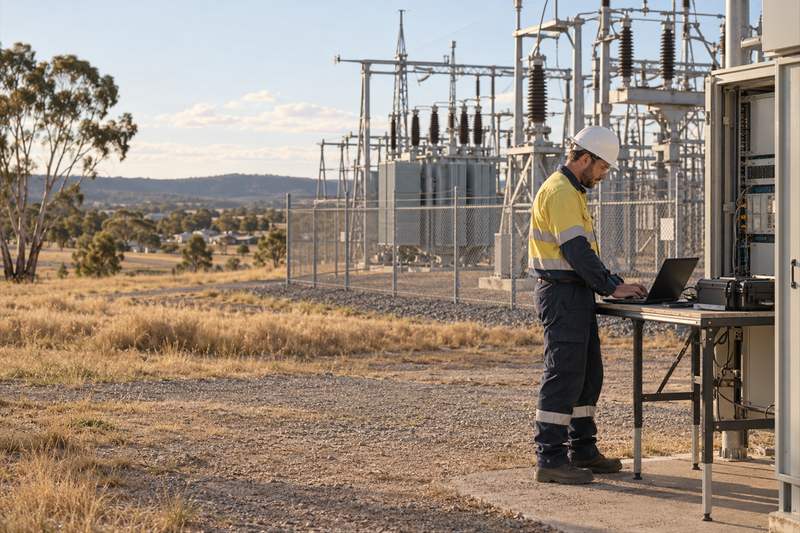
Electrical engineering employment is growing quickly, and most of the advertised roles are in the cities, which leaves regional employers competing hard.
Electrical engineers design, develop and supervise the manufacture, installation, operation and maintenance of equipment, machines and systems that generate, distribute, use and control electric power.2 Regional roles range from substations and distribution networks to mine power systems, solar and wind connections, water treatment controls and the electrical design of buildings.
Most hold an electrical or electrical and electronic engineering degree accredited by Engineers Australia.4 Some come up through the trade: a licensed electrician who completes UEE50420 Diploma of Electrical Engineering, which needs the electrician qualification or an unrestricted licence to enter, can move into technical officer and design roles.5
Engineer registration and electrical licensing are separate systems. Registration covers the engineering judgement; a licence covers hands-on electrical work.
Professional engineer registration for electrical engineering work by state and territory, published by each regulator, 1 November 2026, with Queensland's electrical licensing note.
| State or territory | Registration for electrical engineering | Notes |
|---|---|---|
| Queensland | RPEQ for professional engineering services6 | Electrical installation work generally needs an electrical licence, with an allowance for some work as part of an electrical engineer's profession7 |
| Victoria | Registered professional engineer: electrical is a prescribed area8 | Mandatory for professional electrical engineering services in or for Victoria, except under a registered professional engineer's direct supervision or done only to a prescriptive standard |
| New South Wales | Registered professional engineer (electrical) for class 2, 3 or 9c buildings9 | Direct supervision by a registered engineer allowed |
| Australian Capital Territory | Registered professional engineer: electrical is a prescribed area10 | In force since 6 March 2025 |
| Western Australia | Building engineer registration covers civil, structural, mechanical and fire safety, not electrical11 | No engineer registration for electrical work |
| Tasmania | Building provider licence as an engineer (building services), which covers mechanical, hydraulic and electrical services, for building-design work within the holder's competence12 | Building services design only |
| Northern Territory | Building Practitioners Board registration for certifying engineers in three categories: structural, mechanical and hydraulic13; the board lists no electrical certifying-engineer category | We confirm what the role needs with you |
| South Australia | No registration required to practise14 | None |
Where the Professional Employees Award 2020 covers the role, a full-time graduate electrical engineer with a four- or five-year degree earns at least $68,538 a year, or $34.57 an hour, from 1 July 2026; an experienced engineer at Level 2 earns at least $78,836.15 Engineers covered by the Electrical Power Industry Award 2020 or the Black Coal Mining Industry Award 2020 fall outside the Professional Employees Award.15
The market median for full-time electrical engineers was $2,553 a week, or $67 an hour, in May 2025, nationally.2 A median blends every level of experience, so we test your range against the candidates we speak with before you advertise it.
Electrical engineering job ads rose from 485 to 559 a month in the year to September 2026, with Queensland, New South Wales, Western Australia and Victoria close together at the top.16
Online job ads for electrical engineers by state (three-month average to September 2026) and each state's share of electrical engineering employment (February 2026).2,16
Open a role for its rating and what to put in your brief.
Engineers for generation, transmission, distribution and site power systems.
Engineers for automation, PLC and SCADA systems and instrumentation on plants and utilities.
Engineers who design and maintain signalling and train control systems.
Tell us the voltage and the assets: building services, site power, distribution network, substations or generation. Then the work: design, protection, commissioning, maintenance or project delivery, and the experience level.
Candidates also want to know the software and standards, any switching or access authorisations they would need, on-call duties, and how far they will travel between sites.
You make the hiring decision and employ the person directly. We handle the search and the organising in between.
Regional electrical roles often mean travel between substations, sites or towns, and sometimes an on-call roster. We look first for engineers who already live in your region or have worked in one, and we explain the travel and on-call pattern before anyone applies.
Relocation support, housing and a vehicle can make the difference for an engineer leaving a city network. Tell us what you offer and we raise it in the first conversation.
If the right person needs a visa or sponsorship, our sister business Australian Immigration Agency can advise.
Register with Hire Australia and tell us the systems and voltages you have worked with, your registration and authorisations, and where you would like to live. We welcome graduate and experienced electrical engineers.
Tell us the assets, the location and your start date.
Employers pay nothing until the successful candidate has started and stayed two months. Candidates never pay for recruitment.
A FEW PRACTICAL QUESTIONS
Not usually for engineering work. In Queensland, electrical installation work generally needs an electrical work licence, but the law allows some electrical work as part of an electrical engineer's profession.7 Engineer registration is separate. Hire Australia asks you which hands-on work the role includes and checks candidates' licences and registration against it.
Queensland, Victoria and the ACT require registration for professional electrical engineering work, and NSW does for work on class 2, 3 and 9c buildings. Western Australia's building engineer scheme does not include electrical engineering, and South Australia has no scheme.6,8,9,10,11,14 Hire Australia builds this into your brief.
Full-time electrical engineers earned a national median of $67 an hour in May 2025.2 Where the Professional Employees Award 2020 covers the role, a graduate with a four- or five-year degree earns at least $34.57 an hour from the first full pay period on or after 1 July 2026.15 Hire Australia discusses your salary range and allowances before the search starts.
Electrical Engineer is rated in shortage for 2026,1 and only 14% of electrical engineering job ads with a location were for regional areas in the three months to September 2026, so regional employers compete with a much larger city market.3 Hire Australia targets engineers with regional ties and explains your offer clearly from the first call.
Employers pay nothing until the successful candidate has started and stayed two months. Candidates never pay for recruitment. You employ the person directly, and we agree the terms with you in writing before the search begins. Hire Australia applies the same terms to graduate and senior electrical engineering searches.
No. Hire Australia recruits people you employ directly, in permanent roles. We don’t supply labour hire or temps, and candidates never work on our payroll. We search for and screen people for your vacancy, introduce the ones who fit, and you make the offer and employ them. That keeps the working relationship between you and your new employee from day one.