
Regional Queensland
Regional recruitment specialist for Queensland employers, from Cairns to Toowoomba and Mount Isa. See how hard each region is to hire in, and how we help.
Hire Australia is a regional recruitment specialist. We help mine operators, contractors and consultancies across Australia hire mining engineers for open-cut and underground operations, from graduates starting on site to senior planners and engineers working towards statutory roles. We build the commodity, the roster and the certificates the role leads to into every search.
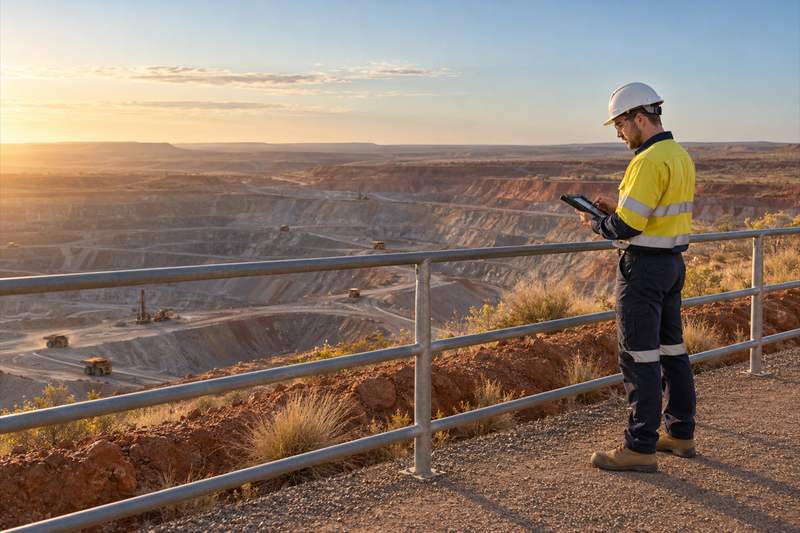
Mining engineering is the most site-based and best-paid of the engineering disciplines, and most of it happens in two states.
Mining engineers plan and direct the engineering side of locating and extracting minerals from the earth.2 On a working mine that means mine design and scheduling, drill and blast, ventilation and ground support underground, haul road and dump design in open-cut operations, and managing production against the plan.
Most hold a mining engineering degree accredited by Engineers Australia.4 After a few years on site, many work towards the statutory certificates that let them hold legally required roles at a mine, which is often the career path a candidate asks about first.
Two systems apply. Engineer registration covers professional engineering work in some states; mine safety laws decide who can hold statutory roles at a mine.
Engineer registration and mine statutory certificate schemes by state and territory, as published by each regulator on 1 November 2026.
| State or territory | Engineer registration | Mine statutory roles |
|---|---|---|
| Queensland | RPEQ for professional engineering services, including mining engineering5 | Certificates of competency for statutory positions in coal and metalliferous mines; holders in those roles must join the practising certificate scheme (law since 10 June 2025)6 |
| New South Wales | Mining engineering is not a listed NSW area. Registration applies only to civil, electrical, fire safety, geotechnical, mechanical or structural work on a class 2, 3 or 9c building or part; directly supervised staff need not register7 | A current practising certificate is required to exercise a statutory function (since 1 October 2020)8 |
| Western Australia | Building engineer registration only (civil, structural, mechanical, fire safety)9 | Statutory positions under the WHS (Mines) Regulations 2022, some needing a statutory certificate10 |
| Victoria and South Australia | Victoria registers five prescribed areas, not mining; South Australia has no scheme11,12 | Certificates of competence are no longer required in either state8 |
| Tasmania | No general mining-engineer licence; engineer licences cover building-design work only13 | We confirm any statutory role requirements with you |
| Northern Territory | No mining category; certifying-engineer registration covers structural, mechanical and hydraulic building certification14 | We confirm any statutory role requirements with you |
| ACT | The ACT's prescribed areas exclude mining15 | We confirm any statutory role requirements with you |
Award minimum: where the Professional Employees Award 2020 covers the role, a full-time graduate with a four- or five-year degree earns at least $68,538 a year, or $34.57 an hour, from 1 July 2026.16 Black coal mining is different: employees covered by the Black Coal Mining Industry Award 2020 fall outside the Professional Employees Award.16
Market median: full-time mining engineers earned $3,518 a week, or $79 an hour, in May 2025. The published group includes petroleum engineers.2 Roster, site allowances and bonuses sit on top of base pay in many offers, so we compare whole packages with you rather than base salary alone.
Mining engineering job ads rose from 806 to 929 a month in the year to September 2026. Western Australia carries about half of them and Queensland about a quarter.17 Of the ads with a location, 376 of 921 were for regional areas, against 29% for all jobs.3
Online job ads for mining engineers by state (three-month average to September 2026) and each state's share of mining engineering employment (February 2026).2,17
Open a role for what to put in your brief.
Short-term and long-term planning engineers for open-cut and underground operations.
Engineers for development, ventilation, ground support and production underground.
Engineers who manage drill and blast design and day-to-day production.
Commodity, mining method and the site come first, because candidates choose between coal, gold, iron ore, base metals and lithium as much as between employers. Tell us whether the role is planning, production, drill and blast, ventilation or geotechnical, and the experience level.
Then the arrangements: residential, drive-in drive-out or fly-in fly-out, the roster, the camp or housing, and whether the role leads to a statutory appointment or certificate.
You make the hiring decision and employ the person directly. We handle the search and the organising in between.
Most mining engineering roles are on rosters. Some suit engineers who want to live in a mining town; others suit people who fly in from a capital or a coastal centre. We search for engineers who already work your pattern and explain the camp, flights and swing before anyone applies.
For residential roles, housing is often the deciding factor. Tell us what you provide and we raise it in the first conversation.
If the right person needs a visa or sponsorship, our sister business Australian Immigration Agency can advise.
Register with Hire Australia and tell us the commodities and mining methods you know, the rosters you will consider, your certificates and the regions you prefer. We welcome graduate and experienced mining engineers.
Tell us the operation, the roster and your start date.
Employers pay nothing until the successful candidate has started and stayed two months. Candidates never pay for recruitment.
A FEW PRACTICAL QUESTIONS
Only for the statutory roles a mine must fill. In Queensland those positions need a certificate of competency, in NSW a current practising certificate, and in Western Australia some statutory positions need a statutory certificate.6,8,10 Hire Australia asks whether your role carries a statutory appointment and searches for engineers who hold or can gain the right certificate.
Full-time mining engineers earned a national median of $79 an hour in May 2025, a group that includes petroleum engineers.2 Where the Professional Employees Award 2020 covers the role, a graduate with a four- or five-year degree earns at least $34.57 an hour from the first full pay period on or after 1 July 2026; black coal is covered by its own award.16 Hire Australia compares whole packages, including roster and allowances, with you.
Western Australia averaged 488 mining engineering job ads a month and Queensland 248 in the three months to September 2026, out of 929 nationally.17 Mining Engineer is rated in shortage for 2026.1 Hire Australia recruits for operations in every mining region.
Yes. Hire Australia recruits mining engineers for residential, drive-in drive-out and fly-in fly-out roles. Tell us the roster, the point of hire, the camp and the flights, and we search for engineers who already work that pattern or want to, and explain the arrangements to every candidate.
Employers pay nothing until the successful candidate has started and stayed two months. Candidates never pay for recruitment. You employ the person directly, and we agree the terms with you in writing before the search begins. That applies to every mining engineering role Hire Australia recruits for, from graduate to senior planner.
No. Hire Australia recruits people you employ directly, in permanent roles. We don’t supply labour hire or temps, and candidates never work on our payroll. We search for and screen people for your vacancy, introduce the ones who fit, and you make the offer and employ them. That keeps the working relationship between you and your new employee from day one.