
Regional Queensland
Regional recruitment specialist for Queensland employers, from Cairns to Toowoomba and Mount Isa. See how hard each region is to hire in, and how we help.
Hire Australia is a regional recruitment specialist. We help mines, contractors, manufacturers, processors, councils and agribusinesses hire work health and safety advisers, HSE coordinators and safety managers, from site-based advisers to people who run a whole safety system. Every search starts with the industry, the hazards and the regulator your sites answer to.
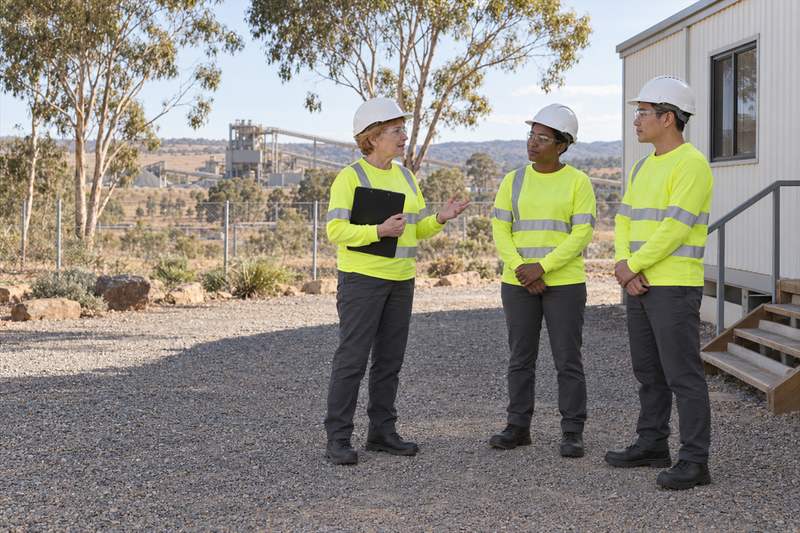
A growing profession that works across many industries, under rules that change at state borders.
Occupational and environmental health professionals develop, carry out and evaluate programs that monitor health and safety at work and compliance with the law, and help injured staff through workers' compensation and rehabilitation.1 For a WHS or HSE adviser that means risk assessments, inspections and audits, incident investigation, contractor management, training and keeping the safety management system current.
WHS officers are usually required to have a Certificate IV qualification or above and/or previous industry experience.4 Relevant national qualifications include the BSB41419 Certificate IV in Work Health and Safety and the BSB51319 Diploma of Work Health and Safety.5,6 In August 2021, occupational health and safety advisers' highest qualifications were spread widely: 18.7% postgraduate, 24.4% bachelor, 26.2% diploma and 18% certificate III or IV.1
No state or territory licence is listed for WHS advisers or managers. What matters is qualifications, professional certification and, for anyone who does the work themselves, the high-risk work licences each state issues.
Licences, certifications and qualifications relevant to WHS and HSE advisers, with the body that issues or sets each. Checked 1 November 2026.
| Jurisdiction | Licence, ticket or certification | When it applies |
|---|---|---|
| All states and territories | No occupational licence or registration is listed for WHS advisers or WHS managers3 | WHS advice and management itself |
| All states and territories | High-risk work licence, issued by the state or territory WHS regulator and valid for five years7 | Doing high-risk work such as scaffolding, forklifts and some cranes; not needed to advise on it |
| All states and territories | AIHS certification: Certified OHS Practitioner (operational roles such as HSE advisers), Certified OHS Professional (senior) and Chartered OHS Professional (executive)8 | Professional standing; applicants must be AIHS members |
| All states and territories | BSB41419 Certificate IV in Work Health and Safety5 | National qualification |
| All states and territories | BSB51319 Diploma of Work Health and Safety6 | National qualification for broader WHS roles |
An adviser works under their state's WHS law and answers to its regulator. Victoria is the main difference, and New South Wales and Queensland have separate regulators for mines.
WHS law and regulator by state and territory. Checked 1 November 2026.
| State or territory | WHS law | Regulator |
|---|---|---|
| New South Wales | Model WHS laws since 1 January 20129 | SafeWork NSW; the NSW Resources Regulator for mines and petroleum sites |
| Victoria | The only jurisdiction that has not implemented the model WHS laws9 | WorkSafe Victoria |
| Queensland | Model WHS laws since 1 January 20129 | Workplace Health and Safety Queensland; Resources Safety and Health Queensland for mining, quarrying, petroleum, gas and explosives |
| Western Australia | Work Health and Safety Act 2020, in operation since 31 March 20229 | WorkSafe WA |
| South Australia | Model WHS laws since 1 January 20139 | SafeWork SA |
| Tasmania | Model WHS laws since 1 January 20139 | WorkSafe Tasmania |
| Northern Territory | Model WHS laws since 1 January 20129 | NT WorkSafe |
| Australian Capital Territory | Model WHS laws since 1 January 20129 | WorkSafe ACT |
Award minimum: award coverage depends on the employer's industry and the employee's duties and classification. An industry award may apply; otherwise an occupational award such as the Clerks Award, the Miscellaneous Award, or no award at all.4 Where the Black Coal Mining Industry Award 2020 covers the role, a Safety Officer is a Group G staff classification with a minimum of $1,357.10 a week, or $38.77 an hour on a 35-hour week, from 1 July 2026.10
Market median: full-time occupational and environmental health professionals earned $2,284 a week, or $57 an hour, in May 2025. The figure is national and includes environmental health officers as well as WHS advisers.1 We compare whole packages with you, including any allowances you offer.
Western Australia had the most job ads for occupational and environmental health professionals in the three months to September 2026, followed by Queensland and New South Wales.2 Queensland holds the largest share of the group's employment.1
Online job ads for occupational and environmental health professionals by state (three-month average to September 2026) and each state's share of the group's employment (February 2026).1,2
Open a role for what to put in your brief.
Advisers for open-cut and underground mines, processing plants and their contractors.
Advisers for building, civil, infrastructure and maintenance contractors.
People who run a safety management system across several sites.
Start with the industry and the hazards, because a mining HSE adviser and a food manufacturing adviser are different hires. Tell us the state and regulator, the size of the workforce and contractors, whether the role is hands-on in the field or runs the system, and whether environment or injury management is part of it.
Then the arrangements: the base and sites, any roster or travel, the qualifications or certification you expect, and who the role reports to.
You make the hiring decision and employ the person directly. We handle the search and the organising in between.
An adviser moving from Victoria, or into it, changes legal frameworks, because Victoria has not implemented the model WHS laws.9 We ask about that early and look for candidates who know your state's law or can show how they have adapted before.
For site roles, tell us whether the role is residential, FIFO or DIDO, its point of hire and its roster, and we explain those arrangements to candidates before they apply.
If the right person needs a visa or sponsorship, our sister business Australian Immigration Agency can advise.
Register with Hire Australia and tell us the industries you know, the states you have worked in, your qualifications and certification, the rosters you will consider and the regions you prefer. We welcome advisers, coordinators and managers.
Tell us the industry, the sites and your start date.
Employers pay nothing until the successful candidate has started and stayed two months. Candidates never pay for recruitment.
A FEW PRACTICAL QUESTIONS
No occupational licence or registration is listed for WHS advisers or managers.3 High-risk work licences, issued by each state's regulator, are for people who do that work themselves.7 WHS officers are usually required to have a Certificate IV or above and/or industry experience.4 Hire Australia matches qualifications and experience to your role.
Full-time occupational and environmental health professionals earned a national median of $57 an hour in May 2025, a group that includes environmental health officers.1 Award coverage depends on the industry and duties; where the Black Coal Mining Industry Award covers the role, a Safety Officer earns at least $38.77 an hour from 1 July 2026.10 Hire Australia compares whole packages with you.
Yes. Victoria is the only jurisdiction that has not implemented the model WHS laws, Western Australia's own Act has applied since 31 March 2022, and New South Wales and Queensland have separate regulators for mines.9 High-risk work licences also come from each state's regulator.7 Hire Australia looks for advisers who know your state's rules.
No. Occupational Health and Safety Adviser is not rated in shortage for 2026, and neither is Environmental Health Officer.11 Job ads for the group still rose to 1,076 a month in the three months to September 2026, from 1,004 a year earlier.2 Hire Australia focuses the search on industry fit and site experience.
Employers pay nothing until the successful candidate has started and stayed two months. Candidates never pay for recruitment. You employ the person directly, and we agree the terms with you in writing before the search begins. That applies to every WHS and HSE role Hire Australia recruits for, from site adviser to safety manager.
No. Hire Australia recruits people you employ directly, in permanent roles. We don’t supply labour hire or temps, and candidates never work on our payroll. We search for and screen people for your vacancy, introduce the ones who fit, and you make the offer and employ them. That keeps the working relationship between you and your new employee from day one.