
Regional Queensland
Regional recruitment specialist for Queensland employers, from Cairns to Toowoomba and Mount Isa. See how hard each region is to hire in, and how we help.
Hire Australia is a regional recruitment specialist. We help mines, processing plants, manufacturers, power stations, water utilities and agricultural businesses across Australia hire qualified maintenance fitters, fitter and turners, fitter-welders and machinists. We build the trade qualification, the task-specific licences and the site requirements into the brief from the start: the forklift, EWP (work platform) or rigging licence, a welding qualification, and any mine site induction.
Job ads for metal fitters and machinists rose over the past year, and more than a third of them were for regional areas.
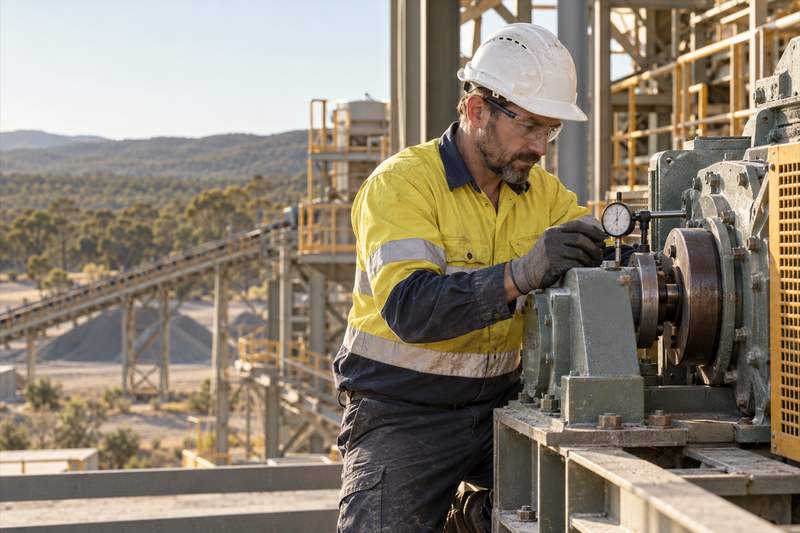
Metal fitters and machinists fit and assemble fabricated metal parts into products, set up machining tools and production machines, and shape metal stock and castings on machining tools. The work includes reading drawings, checking parts for fit with precision instruments, installing hydraulic and pneumatic lines, diagnosing faults and overhauling mechanical parts and fluid power equipment.5
This guide focuses on Fitter (General), Fitter and Turner, Fitter-Welder and Metal Machinist (First Class). The wider metal fitters and machinists group used for earnings, employment and job ads also includes textile, clothing and footwear mechanics and other metal fitters and machinists.5 Fitter (General) specialisations include maintenance fitter, stationary plant mechanic and mechanic for diesel and heavy earthmoving equipment.5 The usual level of skill is a Certificate III with at least two years of on-the-job training, or a Certificate IV, and at least three years of relevant experience may stand in for the formal qualification.5
The national trade qualification is MEM30219 Certificate III in Engineering - Mechanical Trade, which covers fitting, assembly, installation, testing, fault finding and maintenance of mechanical equipment and the use of machine tools.6
No licensing requirement applies to the national trade qualification itself at publication, although individual units and tasks can relate to licensing.7 The table sets out the high-risk work licences each state's work health and safety regulator issues for equipment a fitter may operate, along with welding qualifications and site inductions. You confirm the requirements for your work and jurisdiction with the regulator.
Licences, tickets and certifications that apply to fitting and machining work, as published by each regulator or issuing body on 1 November 2026.
| State, territory or credential | Licence, ticket or certification | What to know |
|---|---|---|
| Trade qualification | MEM30219 Certificate III in Engineering - Mechanical Trade6 | No licensing requirement applies to the qualification itself; some units can relate to licensing in some jurisdictions, so check the requirements for the work7 |
| Queensland | High risk work licence from WorkSafe Queensland for work such as forklift operation, dogging and rigging8 | The licence must be renewed every five years8 |
| New South Wales | SafeWork NSW high risk work licence, with classes including forklift truck (LF) and boom-type EWP (WP)9 | WP applies where the boom is 11 metres or more, including a telehandler with a personnel box9 |
| Victoria | WorkSafe Victoria high risk work licence, which has 30 classes, including forklift (LF), EWP (WP) and non-slewing telehandler (TV)10 | Victoria issues these licences under its own OHS Regulations 201710 |
| South Australia | High risk work licence for forklift operation and for rigging and dogging, assessed by an assessor accredited with SafeWork SA11 | The licence is recognised Australia-wide11 |
| Western Australia | WorkSafe WA high risk work licence, with classes including boom-type EWP (WP), forklift (LF, LO) and rigging (RB, RI, RA)12 | The worker must be over 18 to do high risk work12 |
| Tasmania | WorkSafe Tasmania high risk work licence, with classes including forklift truck (LF), EWP (WP) and dogging and rigging13 | A high risk work licence is recognised in all Australian states and territories14 |
| Northern Territory | NT WorkSafe high risk work licence, including forklift, EWP and dogging and rigging15 | We confirm with you which classes the job needs |
| Australian Capital Territory | High-risk work licence issued by Access Canberra for the WorkSafe ACT Commissioner, including forklift truck (LF) and boom-type EWP (WP)16 | WP covers booms of 11 metres or more16 |
| Welding (fitter-welders) | Welder qualification testing to AS/NZS ISO 9606.1, with AS/NZS 2980 adding Australian and New Zealand requirements for steels17,18 | Weld Australia certifies welders against ISO 960619 |
| Mine sites | Surface Mine Safety Skill Set (RIISS00134), the current national skill set for surface mine safety20 | We confirm with you which site inductions the mine requires |
| Construction sites | Construction induction white card before starting work on a construction site21 | Relevant to installation and construction work |
Where the Manufacturing and Associated Industries and Occupations Award 2020 covers the role, a qualified fitter or machinist at C10, engineering/manufacturing tradesperson level I, must be paid at least $1,119.10 a week, or $29.45 an hour, from 1 July 2026.22 The award covers employers in manufacturing and associated industries and occupations whose employees fall within its classifications.23
Market pay sits far above that floor. Metal fitters and machinists had median full-time earnings of $2,606 a week, or $60 an hour, in May 2025, nationally.4 We agree the full package with you, including any roster, shutdown, site allowance and accommodation terms, before we approach anyone.
Queensland and Western Australia carry the most job ads for metal fitters and machinists, and the two states hold 52.2% of the trade's employment.2,4 Across Australia, ads rose from 2,966 to 3,083 a month in the year to September 2026, and regional areas held 1,136 of the ads with a location.2,3
Online job ads for metal fitters and machinists by state (three-month average to September 2026 and a year earlier) and each state's share of the trade's employment (February 2026).2,4
Start with the plant: fixed processing plant, mobile equipment, rotating equipment, hydraulics or a machine shop. Say whether the job is breakdown and planned maintenance, shutdowns, installation or production machining, and whether the person will weld, turn or program CNC machines.
Then list the tickets the work needs (forklift, EWP, rigging, confined space or a welding qualification) and any site induction. Add whether the role is residential, drive-in drive-out or fly-in fly-out, its point of hire, its roster and the on-call arrangements.
You make the hiring decision and employ the person directly. We handle the search and the organising in between.
We set out the roster, the point of hire, the camp or town housing and the travel in the first conversation with every candidate, using what you put in the brief.
We start with fitters who already live in your region, then widen the search to those ready to move. Tell us about relocation support or housing, and we will put it in front of candidates.
If the right person needs a visa or sponsorship, our sister business Australian Immigration Agency can advise.
Register with Hire Australia and tell us the equipment you work on, your trade qualification, the tickets you hold and where you would like to work. We will talk with you about regional roles that fit.
Tell us the plant, the roster and when you need the person to start.
Employers pay nothing until the successful candidate has started and stayed two months. Candidates never pay for recruitment.
A FEW PRACTICAL QUESTIONS
MEM30219 is the national mechanical trade qualification. Its licensing statement covers the qualification itself, and individual units and tasks can carry licensing requirements, such as high-risk work licences for forklifts and EWPs.7,9 Hire Australia asks candidates which tickets they hold and builds your requirements into the brief. You confirm the licences and their scope with the relevant regulator.
Where the Manufacturing and Associated Industries and Occupations Award 2020 covers the role, a C10 tradesperson must be paid at least $1,119.10 a week, or $29.45 an hour, from 1 July 2026.22 The median for metal fitters and machinists was $2,606 a week, or $60 an hour, in May 2025.4 Hire Australia agrees the full package with you first.
Fitter (General), Fitter and Turner and Fitter-Welder are each rated in national shortage for 2026.1 Job ads averaged 3,083 a month in the three months to September 2026, 1,136 of them for regional areas.2,3 Hire Australia starts with fitters who already live near your site, then widens the search.
Yes. Metal Machinist (First Class) and Fitter-Welder are each rated in national shortage for 2026.1 Machinists set up machine tools to shape metal to fine tolerances, and fitter-welders fit, assemble and weld metal parts.5 Hire Australia asks about the machines, materials and welding qualifications each candidate knows.
Employers pay nothing until the successful candidate has started and stayed two months. Candidates never pay for recruitment. You employ the person directly, and we agree the terms with you in writing before the search begins. The fee terms are the same whether Hire Australia recruits a maintenance fitter for a mine or a machinist for a workshop.
No. Hire Australia recruits people you employ directly, in permanent roles. We don’t supply labour hire or temps, and candidates never work on our payroll. We search for and screen people for your vacancy, introduce the ones who fit, and you make the offer and employ them. That keeps the working relationship between you and your new employee from day one.