
Regional Queensland
Regional recruitment specialist for Queensland employers, from Cairns to Toowoomba and Mount Isa. See how hard each region is to hire in, and how we help.
Hire Australia is a regional recruitment specialist. We help paediatric practices, schools and early intervention services, NDIS providers, hospitals and aged-care providers across regional Australia hire speech pathologists, from new graduates to senior clinicians. We cover certification, the caseload and the travel with you before the search starts.
Speech Pathologist is rated in shortage nationally for 2026. Job ads for the audiologists and speech pathologists/therapists group eased over the year in the cities, while regional ads held steady.1,2
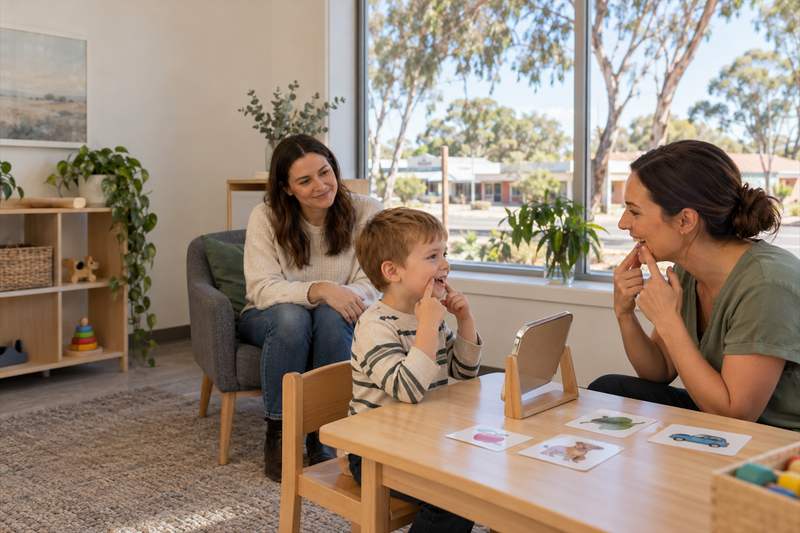
Speech pathologists assess and manage disorders of communication and swallowing. The work includes testing and observing clients, running programs for stuttering and articulation, individual and group therapy after hearing loss, cerebral palsy, surgery or injury, and advising on children who have difficulty learning to speak.4
Speech pathology isn't one of the professions registered through Ahpra. The profession is self-regulated through Speech Pathology Australia, and "speech pathologist" isn't a protected title. Certified Practising Speech Pathologist (CPSP) status is voluntary and requires continuing professional development and recency of practice. Medicare and private health insurers require CPSP status for a client to claim a rebate, so ask for it whenever the role bills those schemes.6
Certification is the same in every state. The check for work with children is not: each state runs its own scheme, and Queensland lists speech pathology for children among the services that need a blue card.7
Certification and each jurisdiction's check for work with children, as published by the issuers on 1 November 2026.
| State or territory | Registration or certification | Check for work with children |
|---|---|---|
| New South Wales | No Ahpra registration; Certified Practising Speech Pathologist (voluntary, needed for Medicare and private health rebates)6 | Working with Children Check, Office of the Children's Guardian8 |
| Victoria | No Ahpra registration; CPSP (voluntary) | Working with Children Clearance9 |
| Queensland | No Ahpra registration; CPSP (voluntary) | Blue card needed for speech pathology for children7 |
| Western Australia | No Ahpra registration; CPSP (voluntary) | Working with Children Check, Department of Communities10 |
| South Australia | No Ahpra registration; CPSP (voluntary) | Working with Children Check, Department of Human Services11 |
| Tasmania | No Ahpra registration; CPSP (voluntary) | Registration to Work with Vulnerable People12 |
| Northern Territory | No Ahpra registration; CPSP (voluntary) | Working with Children Clearance (Ochre Card)13 |
| Australian Capital Territory | No Ahpra registration; CPSP (voluntary) | Working with Vulnerable People registration14 |
Under the Health Professionals and Support Services Award, speech pathology is listed at AQF level 7, 8 or 9, and the level of the qualification the speech pathologist holds sets the rate. From 1 October 2026 a first-year speech pathologist's full-time minimum runs from $1,308.80 a week at AQF level 7 to $1,444.90 at AQF level 9.5 The award covers health-industry employers such as private practices and private hospitals, and employees covered by a state public sector award are outside it.5
The national median for audiologists and speech pathologists/therapists, a group that includes both professions, was $2,003 a week, or $53 an hour, in May 2025.4 We talk with you about the salary, travel allowances and caseload that will compete for your location.
Health Professional employee Level 1, full-time minimum rates by the AQF level of the qualification held, from the first full pay period on or after 1 October 2026.5
| AQF level of qualification | 1st year a week | 1st year an hour | 7th year and after a week |
|---|---|---|---|
| Level 7 | $1,308.805 | $34.44 | $1,689.50 |
| Level 8 | $1,337.10 | $35.19 | $1,721.40 |
| Level 9 | $1,444.90 | $38.02 | $1,755.00 |
The ad counts cover the audiologists and speech pathologists/therapists group. New South Wales, Victoria and Queensland carry most of them. Over the year to September 2026 ads fell in every state except the ACT, with Victoria down from 313 to 253 a month.3
Regional ads were broadly steady at 309 a month, compared with 308 a year earlier, while major-city ads fell from 749 to 635, so regional areas now account for 33% of ads with a location, against 29% for all jobs.2
Online job ads for audiologists and speech pathologists/therapists by state and territory, three-month average to September 2026 and a year earlier.3
| State or territory | Job ads a month, September 2026 | September 2025 |
|---|---|---|
| New South Wales | 2753 | 278 |
| Victoria | 253 | 313 |
| Queensland | 207 | 259 |
| Western Australia | 116 | 129 |
| South Australia | 51 | 58 |
| Tasmania | 26 | 29 |
| Australian Capital Territory | 24 | 19 |
| Northern Territory | 17 | 28 |
Open a setting for the work, the checks and what to put in your brief.
Speech pathologists for children's clinics, school-based services and early intervention.
Speech pathologists working with NDIS participants of all ages.
Speech pathologists for acute wards, rehabilitation and residential aged care.
You make the hiring decision and employ the person directly. We handle the search and the organising in between.
Tell us how the role splits between a clinic base, school visits, home visits, outreach and telehealth, along with the travel time and the vehicle arrangements. We raise these with candidates in the first conversation.
We search first among speech pathologists who already live in or have ties to your region, then among those planning a move. Relocation help and housing support matter most in that second group. If the right person needs a visa or sponsorship, our sister business Australian Immigration Agency can advise.
Register with Hire Australia and tell us your CPSP status, the client groups and settings you have worked with, and where you would like to work. New graduate and experienced speech pathologists are welcome, and we will talk with you about roles that fit.
Tell us the role, the clients, the location and your start date.
Employers pay nothing until the successful candidate has started and stayed two months. Candidates never pay for recruitment.
A FEW PRACTICAL QUESTIONS
No. Speech pathology is self-regulated through Speech Pathology Australia rather than registered through Ahpra, and the title isn't protected by law. Certified Practising Speech Pathologist status is voluntary, but Medicare and private health insurers require it for clients to claim rebates.6 Hire Australia asks every candidate about their CPSP status.
Where the Health Professionals and Support Services Award covers the role, a first-year speech pathologist earns at least $1,308.80 a week with an AQF level 7 qualification, or $1,444.90 at AQF level 9, from 1 October 2026.5 The national median for audiologists and speech pathologists/therapists was $2,003 a week in May 2025.4 Hire Australia discusses your range before the search starts.
Yes, for work with children. Queensland lists speech pathology for children among the services that need a blue card, and the exemption for registered health practitioners doesn't reach speech pathologists, who aren't registered through Ahpra.7,15 Every other state has its own check for child-related work, and Hire Australia raises the right one with each candidate.
Speech Pathologist is rated in shortage nationally for 2026.1 Regional ads for audiologists and speech pathologists/therapists held at 309 a month in the three months to September 2026 while city ads fell.2 Hire Australia starts each regional search with speech pathologists who have ties to your area and plans around your start date.
Employers pay nothing until the successful candidate has started and stayed two months. Candidates never pay for recruitment. You employ the person directly, and we agree the terms with you in writing before the search begins. The same terms apply to every speech pathology role Hire Australia recruits, from new graduates to senior clinicians.
No. Hire Australia recruits people you employ directly, in permanent roles. We don’t supply labour hire or temps, and candidates never work on our payroll. We search for and screen people for your vacancy, introduce the ones who fit, and you make the offer and employ them. That keeps the working relationship between you and your new employee from day one.