
Regional Queensland
Regional recruitment specialist for Queensland employers, from Cairns to Toowoomba and Mount Isa. See how hard each region is to hire in, and how we help.
Hire Australia is a regional recruitment specialist. We help survey practices, engineering consultancies, contractors, mines and councils hire land, engineering and mine surveyors and geospatial specialists, from graduates and survey technicians to registered and licensed surveyors. Every search starts with the registration your work needs in your state.
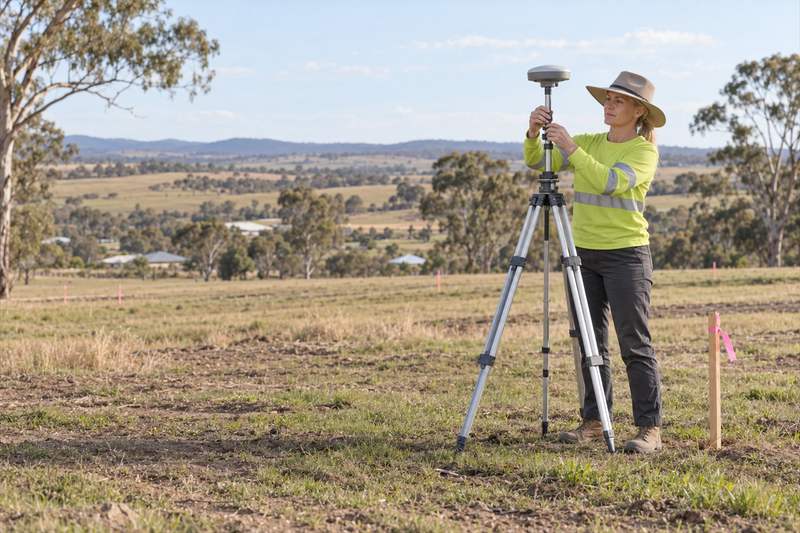
A small profession with a legal gatekeeper: only a registered or licensed land surveyor can define property boundaries.
Surveyors and spatial scientists plan, direct and conduct survey work to determine and mark the boundaries and features of land, sea floors and underground works, and they prepare maps and maintain geographic information.2 In practice the work splits into cadastral (boundary) surveying, engineering and construction surveying, mine surveying, and geospatial work such as GIS, remote sensing and mapping.
Professional surveyors hold a surveying or spatial science degree. In Queensland, a three-year degree is the minimum for registration as a surveyor, and a cadastral endorsement needs a four-year surveying degree.4 Survey technicians often hold the CPP50121 Diploma of Surveying, a current national qualification.5
Every state and territory restricts boundary (cadastral) surveying to registered or licensed land surveyors. The rules for engineering, mining and other survey work differ more.
Surveyor registration and licensing by state and territory, as published by each board or regulator on 1 November 2026.
| State or territory | Registration or licence and who needs it |
|---|---|
| Queensland | Registration with the Surveyors Board of Queensland at four levels, from surveying associate to surveyor with a cadastral, engineering or mining endorsement4 |
| New South Wales | Registered land or mining surveyor; registered land surveyors from other states can work under automatic mutual recognition after notifying the Board, while mining surveyors must apply6 |
| Victoria | Only a licensed surveyor may define and mark property boundaries; licensed surveyors are registered by the Surveyors Registration Board7 |
| Western Australia | Licensed land surveyor under the Licensed Surveyors Act 1909; new applicants complete a two-year professional training agreement with a licensed surveyor8 |
| South Australia | Licensed surveyors work on property boundaries; registered surveyors specialise in engineering, mining and hydrographic surveying9 |
| Tasmania | Registration is mandatory for land surveyors and voluntary for other disciplines such as engineering surveying10 |
| Northern Territory | Only a licensed surveyor, or a person working under one's supervision, may survey land boundaries for a fee11 |
| Australian Capital Territory | Land surveyors must be registered under the Surveyors Act 2007 to determine and mark boundaries12 |
Award minimum: the Surveying Award 2020 covers professional surveyors, including graduate and registered or licensed surveyors, but not local government employees covered by another award. From 1 July 2026, a Surveyor Level I, a professional surveyor with a degree and experience, earns at least $1,344.50 a week, and a Surveyor Level II at least $1,415.00.13
Market median: full-time surveyors and spatial scientists earned $2,300 a week, or $56 an hour, in May 2025. The figure is national and covers the whole group, including geospatial specialists.2 The median sits well above the award minimum, so we compare full packages with you, including vehicles and allowances.
Surveying and spatial job ads averaged 408 a month in the three months to September 2026, against 389 a year earlier. Queensland and New South Wales led, with Western Australia close behind.14 About 29% of located ads were for regional areas, close to the 29% share for all jobs.3
Online job ads for surveyors and spatial scientists by state (three-month average to September 2026) and each state's share of employment (February 2026).2,14
Open a role for what to put in your brief.
Surveyors who define boundaries, prepare plans of subdivision and lodge them for registration.
Surveyors who set out roads, rail, buildings and civil works and check what was built.
Surveyors who measure pits, stockpiles and underground workings and keep mine plans current.
Specialists who build and maintain spatial data, maps and analysis for councils, utilities, mines and consultancies.
Start with the registration the work needs: who signs the plans, whether the person must already be registered or licensed in your state, and whether a graduate can work towards it under supervision. Then the type of survey work, the instruments and software, and the field-to-office split.
Tell us about the arrangements too: the base, how far the field work ranges, whether there are rosters or nights away, and the vehicle and equipment provided.
You make the hiring decision and employ the person directly. We handle the search and the organising in between.
A surveyor moving interstate needs to check registration early. In New South Wales, for example, registered land surveyors from other states can start after notifying the Board, while mining surveyors must apply.6 We raise it before an offer, not after.
Regional survey roles can suit people who like varied field work and a smaller team. We explain the work area, the travel and the housing before candidates apply, and talk through the move with anyone relocating.
If the right person needs a visa or sponsorship, our sister business Australian Immigration Agency can advise.
Register with Hire Australia and tell us the survey work you do, the registration you hold or are working towards, the equipment and software you know and the regions you prefer. We welcome graduates, technicians and experienced surveyors.
Tell us the survey work, the registration it needs and your start date.
Employers pay nothing until the successful candidate has started and stayed two months. Candidates never pay for recruitment.
A FEW PRACTICAL QUESTIONS
For boundary surveys, yes. Every state and territory registers or licenses land surveyors, and in Victoria only a licensed surveyor may define and mark property boundaries.7 Engineering and other survey work is treated differently from state to state, as the table above shows. Hire Australia confirms the registration your role needs before we search.
Full-time surveyors and spatial scientists earned a median of $2,300 a week in May 2025.2 Under the Surveying Award 2020, a Surveyor Level I earns at least $1,344.50 a week from 1 July 2026, unless another award covers the employer, such as some councils.13 Hire Australia compares full packages with you, including vehicles and roster allowances.
Usually under supervision while they work towards registration. Western Australia requires a two-year professional training agreement with a licensed surveyor, and in the Northern Territory a person supervised by a licensed surveyor may survey boundaries.8,11 Hire Australia can recruit graduates where you have a licensed surveyor to supervise them.
Queensland averaged 128 surveying and spatial job ads a month in the three months to September 2026, ahead of New South Wales with 97 and Western Australia with 94.14 Land, engineering and mine surveyors are all rated in shortage for 2026.1 Hire Australia recruits surveyors for every state.
Employers pay nothing until the successful candidate has started and stayed two months. Candidates never pay for recruitment. You employ the person directly, and we agree the terms with you in writing before the search begins. That applies to every surveying and spatial role Hire Australia recruits for, from graduate to registered surveyor.
No. Hire Australia recruits people you employ directly, in permanent roles. We don’t supply labour hire or temps, and candidates never work on our payroll. We search for and screen people for your vacancy, introduce the ones who fit, and you make the offer and employ them. That keeps the working relationship between you and your new employee from day one.